Dolphin Show Pattaya Photography Guide: Best Moments to Capture
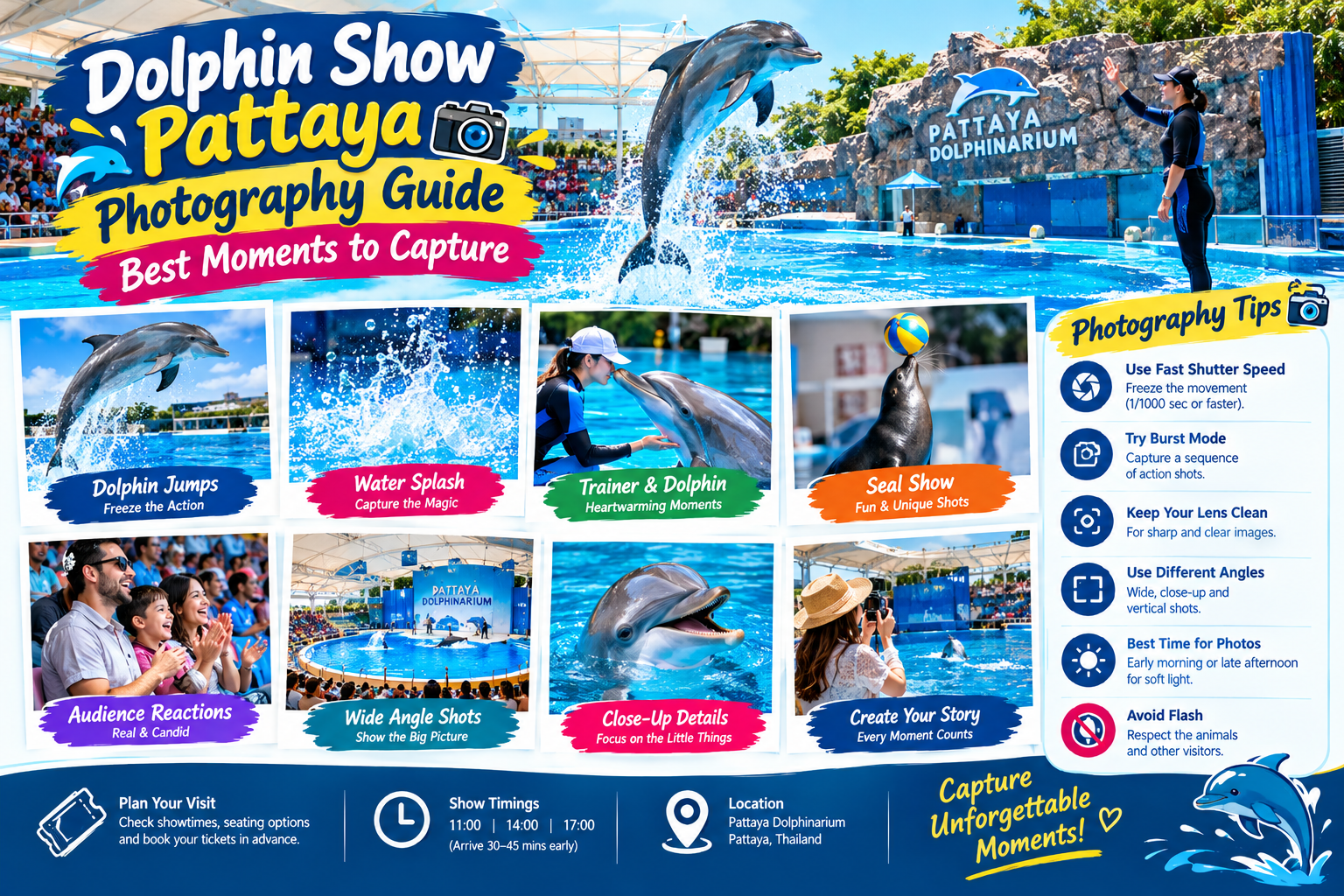
A dolphin show is one of those travel experiences where every few seconds can create a memorable photograph. From dolphins jumping high above the water to trainers interacting with them, a visit to Pattaya Dolphinarium offers plenty of opportunities for exciting travel photography. If you are planning your visit and want to capture more than ordinary tourist pictures, this Dolphin Show Pattaya Photography Guide: Best Moments to Capture will help you plan your camera settings, seating position, timing, and creative shots. Whether you are travelling with family, visiting Pattaya with friends, or simply love wildlife photography, the key to getting impressive images is preparation. Dolphins move quickly, water reflects light unpredictably, and the best moments may last only a few seconds. With the right approach, however, you can capture jumping dolphins, dramatic splashes, trainer interactions, expressive seal moments, and memorable photographs after the show.
Understanding the Best Photography Opportunities
Before taking pictures, it helps to understand how a dolphin performance unfolds. A typical performance combines dolphin movements, jumps, tricks, interactions, and trainer-led activities. This means photographers have many different opportunities to create a varied collection of images.During the main performance, avoid trying to photograph every movement. Instead, watch the rhythm of the show and anticipate moments when the dolphins are likely to jump or interact with their trainers. This allows you to concentrate on composition rather than constantly pressing the shutter.A good photography strategy is to capture a mixture of wide shots, action photographs, close-up details, and atmospheric images. This creates a complete visual story of your visit instead of a gallery filled with similar dolphin-jumping photographs.
Choose Your Seat Carefully
Your seating position can have a major impact on your photographs. Visitors who want closer views may prefer seats toward the front, but they should be prepared for splashes. A slightly farther position can sometimes provide a wider view of the pool and allow you to capture the entire dolphin, trainer, and splash together.For photography, the closest seat is not automatically the best choice. A position with an unobstructed view of the performance area can be more useful than simply sitting as close to the pool as possible.If your primary goal is action photography, consider choosing a seat with a clear view of the performance area. Avoid positions where railings, other visitors, or structural elements frequently block your camera.A wider perspective can also be useful for storytelling photographs. Instead of photographing only the dolphin, you can include the audience, pool, trainer, and surrounding environment in the same frame.
Capture the Dolphin Jump
The dolphin jump is one of the most exciting moments to photograph. The challenge is timing. Dolphins can move from the water to the air and back again incredibly quickly, so waiting until the dolphin is already at the highest point may be too late.Use a fast shutter speed if your camera allows manual control. A shutter speed around 1/1000 second or faster can help freeze fast movement and water droplets. If lighting conditions are lower, you may need to balance shutter speed with ISO and aperture.For smartphones, use the sports or action mode if available. Burst mode is particularly useful because it allows you to capture several frames during a single jump.Instead of concentrating only on the dolphin, leave some space around the animal. This makes the photograph feel more dynamic and gives the viewer a sense of movement.
Photograph the Water Splash
One of the most dramatic elements of dolphin photography is the splash. Water droplets can turn an ordinary photograph into a spectacular action image.Try photographing the moment immediately after the dolphin lands. A high shutter speed can freeze individual droplets in the air, while a slightly slower shutter speed can create a sense of motion.Pay attention to the direction of the light. Backlighting can make water droplets sparkle, while front lighting can reveal more detail in the splash. If the lighting is strong, adjust your exposure so that bright water highlights are not completely overexposed.Burst shooting works especially well for this type of photograph because the exact splash pattern is unpredictable.
Capture Trainer and Dolphin Interaction
Not every great photograph needs to show a dolphin in mid-air. Some of the most meaningful images can come from interactions between dolphins and their trainers.Look for moments when the trainer gives a signal, the dolphin responds, or both appear together. These photographs communicate the relationship and coordination involved in the performance.Try using a wider composition that includes both the trainer and dolphin. A vertical photograph can work particularly well when the dolphin rises above the trainer, while a horizontal frame is useful for capturing the pool and surrounding environment.Pay attention to facial expressions and gestures. A photograph of a trainer looking toward a dolphin can sometimes tell a stronger story than a simple action shot.
Photograph the Seal Performance
Dolphin shows can also provide opportunities to photograph seals. Seal movements can be different from dolphin performances, which means you can experiment with different compositions.Watch for moments when the seal interacts with the trainer or performs a recognizable movement. Because seals may move differently and at a slower pace, you may have more time to compose the shot.Use this opportunity to photograph details such as facial expressions, wet fur, reflections, and interaction with the trainer. Combining dolphin and seal photographs can make your final travel gallery more interesting and varied.
Use Burst Mode for Action Photography
Burst mode is one of the most useful smartphone features for a dolphin show. Instead of taking one photograph when you expect a jump, hold down the shutter and capture a sequence.You can later select the frame where the dolphin is positioned perfectly.Burst mode is particularly helpful when photographing dolphins jumping through the air, dolphins landing in the water, large splashes, trainer interactions, group performances, and moments immediately before or after a jump.Remember that taking hundreds of photographs can quickly fill your storage. Review and delete unwanted images after the show rather than worrying about every frame during the performance.
The Best Camera Settings for Dolphin Photography
If you are using a DSLR or mirrorless camera, shutter speed should be one of your main priorities. Fast-moving dolphins require quick shutter speeds to avoid motion blur.A shutter speed between 1/1000 and 1/2000 second can be useful in bright conditions. You can increase ISO when necessary to maintain a fast shutter speed.Continuous autofocus can also help track moving dolphins. Choose an autofocus mode designed for moving subjects if your camera provides it.For smartphones, keep the lens clean and use the main camera rather than excessive digital zoom. Digital zoom can reduce image quality, especially when you crop heavily later.Avoid using flash during the performance unless the venue specifically permits it. Flash is generally unnecessary in a brightly lit performance area and may not be appropriate for photographing animals.
Try Different Composition Styles
A photography guide should not be limited to technical settings. Composition can make an enormous difference to your final images.Try placing the dolphin slightly off-center instead of always keeping it directly in the middle. This creates more visual movement.Use the pool edge as a leading line toward the dolphin. You can also include the trainer or audience to provide scale.For vertical images, leave enough space above the dolphin when you expect it to jump. For horizontal images, use the surrounding environment to tell a broader story.Another creative option is to photograph reflections on the water. A calm surface can create beautiful visual patterns, while a splash can add energy and texture.
Take Candid Travel Photographs
Some of the best memories from a dolphin show happen outside the actual performance.Photograph your family or friends waiting for the show, reacting to a dolphin jump, looking at the pool, or laughing after getting splashed. These candid moments can make your travel album feel more personal.If children are travelling with you, capture their reactions rather than photographing only the animals. Their excitement, surprise, and expressions can become some of the most valuable photographs from the day.You can also photograph venue details, tickets, signs, seating areas, and small decorative elements to create a visual travel story.
Capture a Photo With the Dolphins
For visitors looking for a special souvenir, dolphin photo opportunities can provide a memorable way to finish the experience. If you participate in an official photo session, think about your pose before it is your turn.A natural smile and relaxed posture generally look better than an overly complicated pose. Families can create a group photograph, while couples or friends can stand together for a memorable travel picture.Follow the staff's instructions carefully during any photo session. Animal welfare and visitor safety should always take priority over getting a particular photograph.
Check Tickets and Timing Before Your Visit
Photography planning starts before you enter the venue. Check the latest showtimes and arrival recommendations before your travel date because schedules and ticket conditions can change.If photography is your priority, consider your preferred viewing position when selecting your ticket. A seat with a clear view of the performance area can be more important than simply choosing the cheapest available option.Arriving early also gives you enough time to find your seat, prepare your camera, clean your lens, and adjust your settings before the performance begins.
What About Dolphin Show Phuket?
Travellers sometimes compare Pattaya's dolphin experience with attractions in Phuket. If you are planning a trip to Phuket, Dolphin Show Phuket is a separate attraction and should not be confused with the Pattaya experience.Visitors researching Dolphin Show Phuket tickets should check the latest seating categories, inclusions, showtimes, and visitor conditions before purchasing. Ticket availability and pricing can vary depending on the date and selected seating category.For travellers planning their holiday in advance, Dolphin Show Phuket booking is an important part of the itinerary. Checking the official booking information before travelling can help you select a suitable date and performance time.Another common search is Dolphin Show Phuket price, especially among families comparing attractions and planning their Thailand travel budget. Prices can change, so visitors should verify the current amount rather than relying on older travel articles or social media posts.Similarly, anyone searching for the Dolphin Show Phuket ticket price should check the current rate for the specific date, visitor category, and seating option they want.For travellers who prefer to arrange their attraction tickets before reaching Phuket, Dolphin Show Phuket online booking can make the planning process more convenient. Online booking information can also help visitors understand available showtimes and seating choices.These Phuket-related searches are useful for travellers comparing dolphin attractions across Thailand, but the photography tips throughout this guide are focused primarily on the Pattaya experience.
Best Time to Photograph the Show
The best time depends less on the clock and more on the lighting and your seating position. Indoor or covered performance environments can produce relatively consistent lighting, but brightness may still change depending on the venue and conditions.If you have flexibility, consider attending a showtime that fits your overall travel schedule and allows you to arrive early. Reaching the venue ahead of time gives you enough time to find your seat, prepare your camera, clean your lens, and adjust your settings.Do not spend the first few minutes of the performance changing settings repeatedly. Take a few test photographs early and then concentrate on anticipating the major moments.
Photography Mistakes to Avoid
One common mistake is using excessive zoom. Digital zoom can make photographs look soft and noisy. It is generally better to capture a slightly wider image and crop it later.Another mistake is using a slow shutter speed. Even if the dolphin is sharply focused, its movement can create unwanted blur.Overexposure is another problem, especially when photographing white dolphins and bright water. Check your highlights if your camera provides a histogram or highlight warning.Finally, do not watch the entire show through your camera screen. Put the camera down occasionally and enjoy the performance directly. Some of the best travel memories are experiences you remember rather than photographs you take.
Create a Complete Dolphin Show Photo Story
A strong travel photo collection should include different types of images. Start with an exterior or arrival photograph, followed by a venue detail or ticket image.Next, capture a wide shot of the performance area. Then focus on action photographs of dolphins jumping, splashing, and interacting with trainers.Include a few seal photographs, audience reactions, candid family moments, and close-up details. Finish with a memorable portrait or dolphin photo after the performance if you participate in an available photo experience.This approach gives you a beginning, middle, and ending for your travel story.
Photographing for Social Media
If you plan to share your photographs on Instagram, Facebook, Pinterest, or travel blogs, consider taking both horizontal and vertical images.Vertical photographs work well for Stories, Reels covers, Pinterest graphics, and mobile-first content. Horizontal photographs are useful for blogs, website banners, and travel guides.When photographing a dolphin jump vertically, leave some space above the animal. This gives you flexibility when cropping the image for different social platforms.You can also create a sequence of photographs showing the dolphin preparing to jump, rising above the water, reaching its highest point, and landing. A carousel or photo collage can turn these individual moments into an engaging visual story.
Final Photography Tips
A visit to Pattaya Dolphinarium can produce a wide range of memorable photographs if you prepare before the show. Arrive early, choose your seat carefully, use a fast shutter speed, activate burst mode, keep your lens clean, and anticipate the action rather than reacting after it happens.The most important tip is to balance photography with the experience itself. Take enough photographs to preserve the memories, but also spend time watching the dolphins without a camera in front of you.Whether you are a smartphone photographer or an experienced camera user, the combination of fast-moving dolphins, dramatic splashes, trainer interactions, seals, and candid reactions provides plenty of creative opportunities.For visitors also researching Phuket, remember that Dolphin Show Phuket, Dolphin Show Phuket tickets, Dolphin Show Phuket booking, Dolphin Show Phuket price, Dolphin Show Phuket ticket price, and Dolphin Show Phuket online booking refer to a separate attraction and should be researched independently before booking.With thoughtful preparation and a little patience, your Pattaya dolphin show photographs can become more than simple snapshots—they can tell the complete story of an exciting day in Pattaya.
Read More : Best Dolphin Show in Phuket: Tickets, Shows & Visitor Tips
